








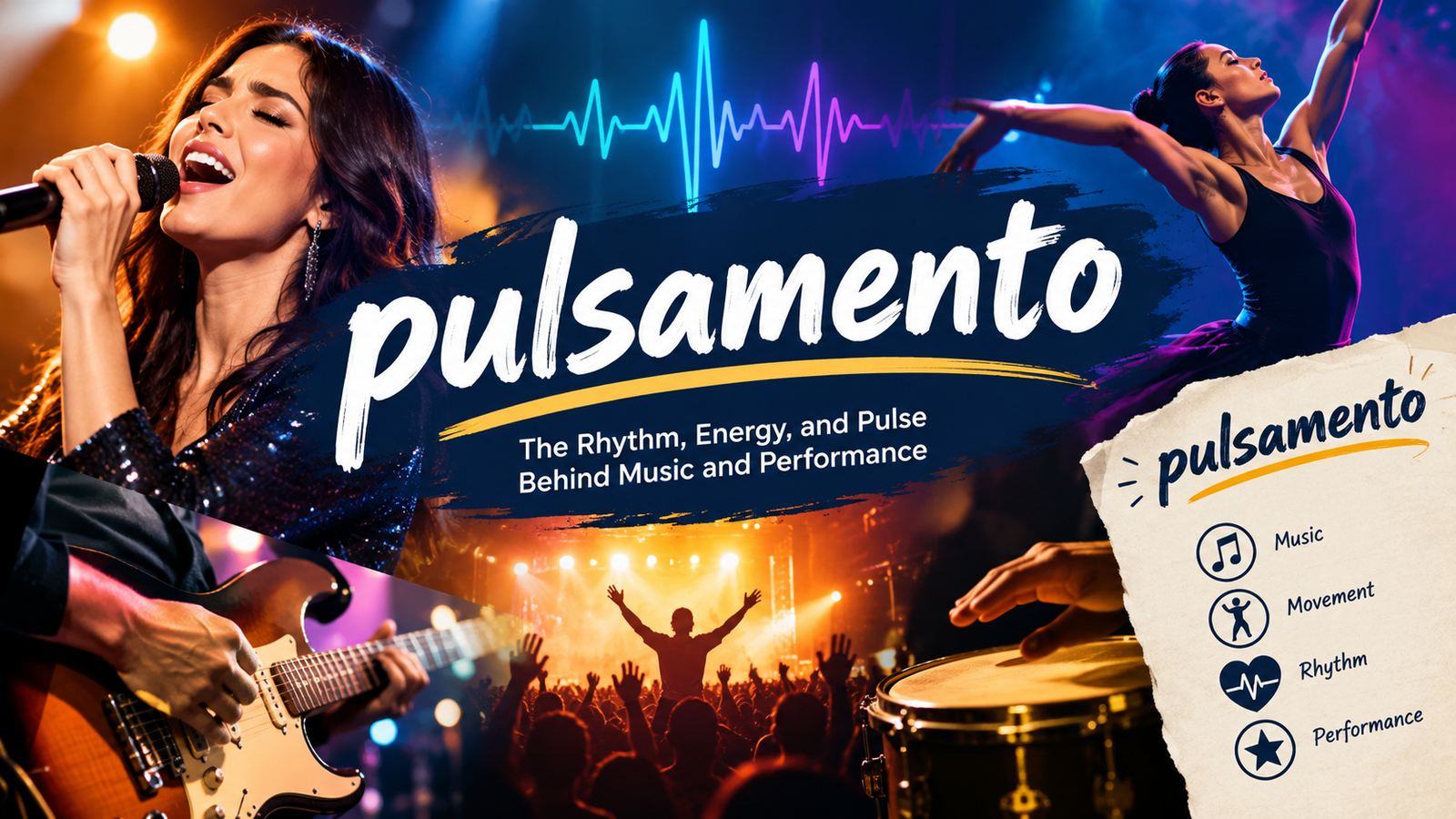
Pulsamento is a fascinating word that has begun appearing in online conversations about music, rhythm, movement, and performance. Although the term is not a widely standardized English technical expression, it is commonly used as a descriptive idea connected with pulse, rhythmic flow, and the repeating movement that gives music its sense of life.
For musicians, dancers, performers, and even celebrity artists, rhythm is more than simply keeping time. It can influence how a performance feels, how an audience responds, and how a song moves from one moment to another. Understanding the idea behind pulsamento therefore provides an interesting way to look at music and performance from a more human perspective.
What Does Pulsamento Mean?
The simplest way to understand pulsamento is through the idea of a repeating pulse or rhythmic movement. In music, the underlying pulse is the regular beat that listeners can often feel even when the melody, instruments, or vocal performance becomes complicated.
Music education resources generally describe pulse or beat as the regularly recurring foundation beneath a musical performance. Tempo, by comparison, describes the speed at which that pulse moves, while meter organizes pulses into recurring groups.
Pulsamento can therefore be used as an expressive way of describing that continuing sense of movement. It is especially useful when talking about the feeling of rhythm rather than trying to define a strict technical musical procedure.
That distinction is important. The word should not automatically be treated as a formal scientific theory or a universally recognized category of music theory. Established terms such as pulse, beat, rhythm, tempo, and pulsation are more precise when technical accuracy is required.
The Connection Between Pulse and Music
Every memorable performance has some relationship with timing. A singer can stretch a phrase, a drummer can emphasize a beat, and a guitarist can change the intensity of a passage, but listeners still tend to perceive an underlying sense of timing.
Music theory describes pulse as a kind of background heartbeat of a piece. It gives performers a reference point and allows listeners to anticipate movement. People often respond to this pulse naturally by tapping their feet, nodding their heads, or moving their bodies.
This is where the idea of pulsamento becomes particularly interesting.
Rather than focusing only on individual notes, pulsamento can describe the continuous feeling that connects those notes. One beat by itself may not create much of an experience. A sequence of beats, accents, pauses, and movements creates something that feels organized and alive.
Pulsamento and Celebrity Performances
For celebrity musicians and performers, rhythm can become part of an artist’s recognizable identity.
A singer may have a distinctive way of entering a beat. A drummer can create a signature groove. A dancer may appear effortless because their movements are closely connected to the music. Even a performer who is not primarily known as a musician can use timing to create a memorable stage presence.
This does not mean that every celebrity performance should be described using the word pulsamento. Instead, the concept can help explain why some performances feel energetic, relaxed, dramatic, or emotionally powerful.
Consider a live concert. The audience may hear the same song they know from a recording, but the experience can feel different because live performance introduces movement, physical presence, crowd interaction, pauses, changes in intensity, and subtle variations in timing.
The underlying pulse gives the performance structure while the performer adds personality.
Rhythm Is More Than Speed
One common misunderstanding is confusing rhythm with tempo.
Tempo refers to how quickly the musical pulse moves. A song can have a fast tempo or a slow tempo. Rhythm, however, concerns the arrangement of sounds and silences over time. Meter describes how beats are grouped into recurring patterns.
Pulsamento, when used descriptively, sits closer to the idea of continuous rhythmic motion.
A slow song can have a powerful pulse. A fast song can feel relaxed if its rhythmic elements are handled carefully. A performer can also create tension by playing slightly against the expected timing before returning to the underlying beat.
That interaction between expectation and timing is one reason rhythm can have such a strong emotional effect.
How Performers Feel the Beat
Experienced musicians often develop an internal sense of timing through repeated practice. They do not necessarily need to consciously count every beat while performing.
A guitarist may feel where the next note belongs. A drummer may anticipate a transition before it arrives. A vocalist can shape a phrase around the instrumental rhythm without visibly counting.
Music education materials describe the pulse as something listeners and performers can physically perceive. Tapping, clapping, marching, or moving with music can help reveal that underlying structure.
This internal timing is particularly important during live performances. When several musicians perform together, they need a shared understanding of the musical pulse. Without that coordination, even technically skilled players can sound disconnected.
Pulsamento in Dance and Visual Performance
The concept also extends naturally beyond music.
Dancers work with rhythm through their feet, hands, body positions, pauses, and changes in speed. Choreography may follow the obvious beat of a song or deliberately move between beats.
When audiences watch a polished dance performance, they may not consciously analyze the timing. They simply experience the sense that movement and music belong together.
That relationship between sound and movement is one reason the idea of pulsamento can be useful as a descriptive concept. It draws attention to the continuing motion beneath the visible performance.
In film, television, and stage productions, similar principles appear in editing and visual storytelling. Quick cuts can create urgency, while longer shots can produce a calmer sensation. Dialogue, music, camera movement, and pauses all contribute to a larger rhythm.
The Human Connection to Pulse
The idea of a pulse is not limited to music. The human body itself operates through many recurring processes.
In healthcare, a pulse refers to the pressure wave created when the heart contracts and blood moves through the arteries. Medical professionals assess characteristics such as pulse rate, rhythm, force, and equality.
This provides an interesting comparison with musical rhythm, although the two should not be confused.
A heartbeat is a biological process. A musical beat is an organized feature of sound. The similarity is that both involve repetition and timing, which explains why writers often use heartbeat imagery when describing rhythm.
For creative writing, pulsamento can therefore work as a metaphor for something that continuously moves beneath the surface.
Why Timing Matters to Famous Artists
Celebrity performers operate in an environment where audiences remember moments rather than just technical details.
A singer’s pause before a chorus can become memorable. A dancer’s perfectly timed movement can make a performance visually striking. A musician’s ability to hold back before a major musical release can create anticipation.
These moments depend heavily on timing.
The performer is not simply following a beat. They are interacting with it.
That is why rhythm can contribute to an artist’s recognizable style. Two performers can sing the same melody while creating completely different experiences because they use phrasing, timing, accents, pauses, and dynamics differently.
Is Pulsamento a Formal Musical Term?
This is an important question because the word appears in many different online explanations.
There is no reason to treat every online definition as authoritative. The established vocabulary of music theory includes pulse, beat, rhythm, tempo, and meter, each with specific meanings.
Pulsamento is better understood as an informal or descriptive expression when used in English discussions of rhythm.
Some online sources associate the word with particular guitar techniques or broader musical concepts, but those claims should be evaluated carefully rather than automatically presented as universal music-theory rules.
Using the word descriptively is reasonable. Presenting it as a universally recognized technical classification without qualification is much less reliable.
Why the Word Is Interesting Today
Modern audiences encounter music through concerts, streaming services, short videos, social platforms, films, games, and live broadcasts. As a result, discussions about rhythm increasingly move between professional music terminology and everyday language.
A word such as pulsamento can be attractive because it captures something that people experience intuitively: the feeling of movement beneath music.
It gives writers a way to talk about rhythm emotionally as well as technically.
For musicians, however, precision still matters. If someone is discussing beats per minute, meter, note values, or a particular playing technique, established musical terminology provides clearer communication.
Frequently Asked Questions
What is pulsamento in simple words?
Pulsamento can be understood as a descriptive term for a continuing pulse, beat, or rhythmic movement. In music, it relates closely to the feeling of an underlying pulse that helps carry a performance forward.
Is pulsamento an official music theory term?
It is not a universally standardized English music-theory term. Established concepts such as pulse, beat, rhythm, tempo, and meter have clearer technical definitions and are preferable when discussing formal musical analysis.
How is pulsamento different from tempo?
Tempo describes the speed of the musical pulse. Pulsamento, when used descriptively, refers more generally to the continuing sense of pulse or rhythmic movement. Music education sources distinguish pulse from tempo by defining pulse as the recurring beat and tempo as the rate at which that beat moves.
Can pulsamento describe dance?
Yes. In an informal or artistic context, the word can describe the rhythmic movement that connects a dancer’s actions to music. However, choreography and dance theory have their own established vocabulary for describing timing and movement.
Can pulsamento refer to the human heartbeat?
It may be used metaphorically to describe a heartbeat or recurring bodily rhythm. In medical contexts, however, terms such as pulse, pulse rate, pulse rhythm, and pulsation are clearer and more appropriate.
Conclusion
Pulsamento offers an interesting way to think about the relationship between rhythm, movement, and performance. Although it is not a universally standardized English technical term, the idea behind it connects naturally with the established musical concept of pulse: a recurring beat that gives music structure and helps performers and audiences experience movement through time.
For celebrities and professional performers, this underlying sense of timing can become an important part of stage presence and artistic identity. A song may have lyrics and melody, but its emotional impact can also depend on when a note arrives, when a performer pauses, and how the audience feels the beat.
Ultimately, pulsamento is most useful when treated as a descriptive idea rather than an absolute technical definition. It points toward something musicians and audiences already understand instinctively—the continuing pulse that gives sound, movement, and performance a sense of direction and life.