


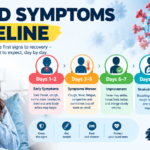






Understanding the covid symptoms timeline can help you recognize early warning signs, monitor changes in your health, and know when to seek medical care. COVID-19 does not affect everyone in the same way. Some people experience mild cold-like symptoms, while others develop fever, breathing difficulties, or prolonged fatigue.
Symptoms may begin a few days after exposure, become more noticeable during the first week, and gradually improve over the following days. However, the timing varies depending on factors such as vaccination status, previous infections, age, underlying health conditions, and the circulating variant.
Knowing how symptoms commonly develop can make it easier to distinguish expected changes from signs that require medical attention. Although many people recover within a couple of weeks, some experience symptoms that last considerably longer.
How Long Does COVID-19 Take to Show Symptoms?
COVID-19 symptoms do not usually appear immediately after exposure. The period between becoming infected and developing symptoms is called the incubation period.
Symptoms can begin within a few days of exposure, although the exact timing varies. Many people develop symptoms around three to six days after infection, but some may notice them earlier or later.
During this period, a person may feel completely normal despite having an infection. People can also spread the virus before symptoms appear or without developing noticeable symptoms at all.
Because symptoms overlap with those of influenza, the common cold, and other respiratory illnesses, it is not always possible to identify COVID-19 based on how someone feels. Testing can help clarify the cause when symptoms or a known exposure raise concern.
COVID Symptoms Timeline Day by Day
Days 1–2: Early Symptoms Begin
The first noticeable symptoms are often mild. A scratchy or sore throat, tiredness, a runny nose, nasal congestion, headache, or a dry cough may develop. Some people also experience muscle aches, chills, or a general feeling of being unwell.
Fever can occur, but it is not present in every case. Similarly, a person may develop several symptoms together or notice only one or two at first.
These early symptoms can resemble an ordinary cold, making it difficult to know the cause without testing. If you have recently been exposed to someone with COVID-19, take the possibility seriously, particularly if you live or work with people at higher risk of severe illness.
Rest, drink enough fluids, and monitor how you feel. Consider testing according to the test instructions and current local health guidance. If an initial rapid antigen test is negative but symptoms continue, repeat testing as recommended because an early test may not detect the infection.
Days 3–5: Symptoms May Become More Noticeable
For many people, symptoms become clearer during the next few days. A cough may become more persistent, fatigue may increase, and nasal congestion or a sore throat may continue. Some people develop fever, chills, or body aches during this period.
The experience is not the same for everyone. One person may feel substantially better by the third day, while another may feel worse before improvement begins.
Changes in taste or smell can occur, although these symptoms are less consistently reported with some newer variants than they were earlier in the pandemic. Digestive problems, including nausea, diarrhea, or vomiting, can also develop.
Pay attention to the overall direction of your symptoms rather than judging recovery by a single good or bad day. Worsening shortness of breath, persistent chest pain, confusion, or other serious symptoms should never be dismissed as an ordinary stage of infection.
Days 6–7: Improvement or Continued Illness
Around the end of the first week, some people begin to notice meaningful improvement. Fever may settle, throat discomfort may ease, and energy levels may slowly return.
However, others continue to experience coughing, headaches, congestion, or considerable tiredness. Symptoms can fluctuate, so feeling better one morning does not necessarily mean that recovery is complete.
This period deserves particular attention for people at increased risk of severe COVID-19. Older adults, people with weakened immune systems, pregnant individuals, and those with certain chronic medical conditions may need closer monitoring or early medical advice.
If you are at higher risk and suspect COVID-19, contact a healthcare professional promptly. Some antiviral treatments must be started within a limited period after symptoms begin, so waiting until symptoms become severe may reduce available treatment options.
Days 8–10: Gradual Recovery or Warning Signs
Many people continue improving during the second week. Fever may have resolved, breathing may feel normal, and appetite and energy may gradually return. A mild cough or lingering fatigue can remain even when the infection is improving.
Not everyone follows this pattern. Some people develop new or worsening symptoms, and others may still feel significantly unwell. The day of illness alone cannot determine whether a person is safe or whether a complication is developing.
Seek urgent medical attention if breathing becomes difficult, chest pain persists, new confusion develops, or you cannot stay awake or remain hydrated. Blue, gray, or unusually pale lips or skin can also signal an emergency, depending on natural skin tone and other symptoms.
Do not wait for a particular day on the timeline before seeking help. Serious symptoms require prompt assessment whenever they occur.
Days 11–14: Recovery Continues
By the second week, many people with mild COVID-19 are feeling much better. They may return gradually to ordinary activities as their symptoms improve and they have enough energy to manage daily tasks.
A lingering cough, reduced stamina, or tiredness does not automatically mean that the infection is getting worse. Respiratory irritation and the body’s recovery process can take additional time to settle.
Nevertheless, persistent fever, worsening symptoms, or difficulty breathing should be discussed with a healthcare professional. Recovery may take longer for people with severe illness, underlying medical conditions, or weakened immune systems.
There is no single day when everyone is completely recovered. A realistic approach is to return to normal routines gradually and allow extra rest when needed.
What Affects the COVID Symptoms Timeline?
Several factors influence how quickly symptoms appear, how severe they become, and how long they last. The circulating variant can affect the pattern of symptoms, while vaccination and previous infection may influence protection against severe disease.
Age and general health also matter. Older adults and people with certain medical conditions face a greater risk of complications. People with weakened immune systems may experience more prolonged illness or remain infectious for longer than others.
The severity of the initial infection is another important consideration. Someone with mild symptoms may recover relatively quickly, whereas a person who develops pneumonia or requires hospital treatment may need a much longer recovery period.
Individual experiences also differ for reasons that are not always predictable. Two people infected at the same time can have very different symptoms and recovery patterns.
When Should You Seek Medical Help?
Most mild cases can be managed at home, but it is important to recognize warning signs. Seek emergency medical care for severe breathing difficulty, persistent chest pain or pressure, new confusion, inability to wake or stay awake, or other signs of a life-threatening problem.
Contact a healthcare professional if your symptoms are getting worse, fever persists, you are struggling to drink enough fluids, or you are concerned about your recovery. If you belong to a higher-risk group, seek advice early even if your symptoms initially seem mild.
Treatment decisions depend on individual risk factors, symptom onset, medication interactions, and local availability. A healthcare professional can determine whether testing, antiviral treatment, or further evaluation is appropriate.
How to Support Recovery at Home
Rest is important during the acute stage of illness. Avoid pushing yourself to exercise or complete demanding tasks when you feel weak or feverish. Drink fluids regularly, eat nourishing food as tolerated, and give yourself enough time to sleep.
Over-the-counter medicines may help relieve fever, aches, or congestion when used according to their labels and your healthcare professional’s advice. Check with a pharmacist or clinician if you take other medicines, have chronic health conditions, are pregnant, or are unsure which treatment is appropriate.
Reduce the risk of spreading the virus by staying home while you are sick, improving indoor ventilation, and avoiding close contact with people at greater risk of severe illness. Follow current local guidance on returning to work, school, and social activities. A well-fitting mask can provide additional protection around others, especially in crowded indoor spaces.
Can COVID Symptoms Last Longer Than Two Weeks?
Yes. Some people continue experiencing symptoms for several weeks after the initial infection. Fatigue, cough, headaches, changes in smell or taste, sleep problems, and difficulty concentrating may take time to resolve.
When symptoms persist, recur, or develop after the initial illness and continue for an extended period, a healthcare professional can assess whether they may be related to post-COVID conditions or another health problem.
Long COVID, also called post-COVID condition, can involve symptoms that last for months and sometimes longer. It can occur even after an initially mild infection. Persistent or disruptive symptoms deserve medical attention rather than being ignored or attributed automatically to normal recovery.
Frequently Asked Questions
How many days after exposure do COVID symptoms start?
Symptoms commonly begin within several days of exposure, often around three to six days, although the incubation period varies by variant and individual circumstances. Some people never develop symptoms.
What is the first symptom of COVID-19?
A sore throat, runny nose, congestion, fatigue, headache, or cough may be among the first symptoms. There is no single first symptom that occurs in everyone.
When are COVID symptoms usually at their worst?
Some people feel worse during the first several days, while others experience a different pattern. Symptoms can worsen during the first week, but there is no universal peak day. Severe or worsening symptoms need medical attention regardless of timing.
How long does mild COVID-19 last?
Many people with mild illness improve within one to two weeks. However, cough, fatigue, and other symptoms can last longer, and recovery depends on individual circumstances.
Can you have COVID without a fever?
Yes. Fever is not required for a COVID-19 infection. Some people experience only mild respiratory symptoms, while others have no noticeable symptoms.
When can I return to normal activities?
Return to activities according to your symptom improvement, overall condition, and current local public health guidance. Avoid contact with vulnerable people while you may be infectious, and take additional precautions when around others.
Conclusion
The covid symptoms timeline provides a useful general picture of how an infection may develop, from early symptoms in the first few days to gradual improvement over one or two weeks. However, it is a guide rather than a strict schedule. Some people recover quickly, while others develop complications or experience prolonged symptoms.
Pay attention to how you feel, consider testing when appropriate, rest during recovery, and take steps to protect others. Most importantly, do not rely on the calendar alone to judge the seriousness of an illness. Recognizing warning signs and seeking timely medical advice can make a meaningful difference, particularly for people at higher risk of severe disease.